
FAQ: Your Questions About the City Budget and May Revise, Answered
What is the FY2027 May Revise budget proposal focused on?
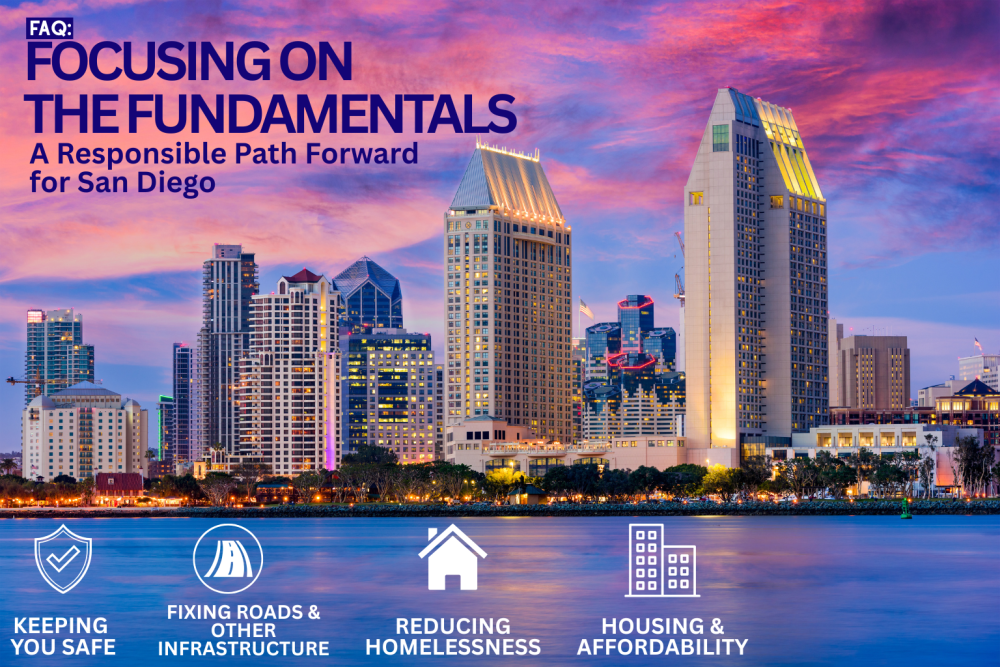
Mayor Todd Gloria’s FY2027 May Revise budget proposal is focused on maintaining the City’s core priorities: keeping people safe, fixing roads and neighborhood infrastructure, reducing homelessness, and building more housing.
The May Revise makes targeted restorations in services and programs based on community feedback, City Council discussions, updated financial projections, and funding adjustments identified during the budget process. This includes recreation center and library hours in several communities, youth drop-in center funding, support for violence prevention programs, and neighborhood improvement projects.
These are the services residents rely on every day, and they guided every decision in this proposal.
Why are there cuts in this budget?
The City is facing a significant budget gap driven by rising costs, slower revenue growth, and broader economic uncertainty at the federal and state level.
These fiscal pressures are affecting cities across California and the country, but San Diego still must make responsible local decisions to maintain essential services.
While the General Fund Five-Year Outlook projected an $88.8 million baseline deficit for FY27, an increase in costs and drop in hotel tax revenue has pushed the deficit closer to $120 million.
A deficit like this doesn’t happen over the course of a couple years. As our City grows and expands, our need to provide services like road repair and infrastructure maintenance, also grows. At the same time, construction costs are going up, along with costs for everything else, like equipment, utilities and fuel.
San Diego’s major revenues sources are growing more slowly than in prior years. For example, property tax, the City’s largest revenue source, is being affected by high interest rates. Sales tax is growing at about 2%, below the previous average of 3% to 4%. And hotel tax is growing at about 1.5%, below the roughly 6% seen in stronger tourism years.
Meanwhile, San Diego’s sales and hotel tax rates are lower than other large cities in the State. In fact, San Diego has the lowest tax rate of the 20 largest cities in California.

At the same time, the cost of providing the same level of service continues to increase. Over the last 5 years:
Insurance costs are up 168%.
Litigation claims are up 87%.
Vehicle replacement costs are up 60%.
The City has more than 1,600 facilities to operate, and a fleet of more than 5,000 vehicles to fuel and maintain.
When prices for water and utilities rise, our costs also go up. In FY 2027 alone, the City’s energy and utility costs are increasing by $7.3 million.
When faced with infrastructure emergencies, the City has to take on debt to do the necessary construction work. When vehicles break down, we have to fix them.
We have an older city with infrastructure in constant need of repair, and those costs continue to rise as maintenance is deferred.
The City’s General Fund pays for the core services provided by the City. That includes public safety, parks and recreation programs, library services, road repair, stormwater and other infrastructure maintenance.
What does this mean for residents?
The May Revise reflects community feedback while continuing to maintain a balanced and fiscally responsible budget. Core services remain in place—public safety, street repair, homelessness services, and housing efforts continue.
Following community feedback and City Council discussions, the Mayor’s May Revise restored targeted services and programs, including recreation center and library hours in several communities, youth investments, shoreline park maintenance staffing, and funding for select neighborhood projects.
At the same time, some service levels will still be adjusted. This reflects the reality of balancing the budget while protecting the services people depend on most.
Even within these core priorities, some reductions and tradeoffs remain necessary to maintain long-term financial stability.
TOP PRIORITIES
What are the City’s top priorities in this budget?
The budget focuses on four core priorities:
Keeping you safe.
Fixing roads, sidewalks and neighborhood infrastructure.
Reducing homelessness.
Housing and affordability.
These priorities reflect what we consistently hear from San Diegans.
How is public safety being supported?
The May Revise maintains funding for police officers, firefighters, and lifeguards citywide, with no fire station brownouts or police station closures.
For the Fire-Rescue Department, the proposed FY27 budget reduces positions associated with training, recruitment and community engagement, but it does not include any layoffs or elimination of filled positions.
For the San Diego Police Department, the budget proposal holds some leadership positions vacant. However, it preserves front-line police officers and avoids additional decreases in overtime for patrol units, neighborhood policing, and youth services.
What investments are being made in infrastructure?
The City continues to invest in safer, more reliable neighborhoods, including:
Street resurfacing.
Traffic safety improvements.
Ongoing infrastructure maintenance.
The FY2027 May Revise continues implementation of the City’s Speed Management Plan, which focuses on reducing speeding and improving safety on streets with the highest risk of severe and fatal crashes. This includes investments in the City’s “Fatal 15” corridors and intersections, where traffic deaths and serious injuries are most concentrated.
Improvements may include traffic calming measures, upgraded crosswalks, signal improvements, speed feedback signs, pedestrian safety enhancements, and redesigned street configurations intended to slow vehicle speeds and improve safety for everyone using the road.
These investments focus on improving conditions where people live and travel every day.
CAPITAL IMPROVEMENTS PROGRAM
Projects funded in the FY27 May Revise proposal include:
$590.0 million for Public Utilities funded projects, which includes the Pure Water Program.
$42.8 million for the Utilities Undergrounding Program, which also benefits many Transportation assets.
$30.8 million for park improvements.
$47.0 million for stormwater flood resilience and green infrastructure.
$18.3 million for Convention Center improvements.
TRANSPORTATION AND TRAFFIC SAFETY
The FY27 proposed Transportation budget prioritizes fixing the roads, allocating $92.8 million for the street paving program, including asphalt repair, asphalt trench restoration, pothole repair, and slurry seal road repair, and capital activities, including overlay and reconstruction of roads, as well as prioritizing traffic safety, with $68.1 million going to Vision Zero, sidewalks, streetlights, traffic calming measures, traffic signals, median installation, bridges, and road modifications. The May Revise also funds the Speed Management plan.
HOMELESSNESS AND HOUSING
Is the City continuing efforts to reduce homelessness?
Yes. The budget continues funding for shelter, outreach and pathways to housing.
San Diego has made progress, including a recent reduction in unsheltered homelessness, and this budget continues to focus on what is working.
The Mayor's FY27 May Revise prioritizes addressing homelessness and includes $97.1 million funding for homeless shelter programs, supportive services, outreach teams, eviction prevention, housing instability prevention and encampment cleanups. Homelessness was one of the top issues that San Diegans identified as a priority in the public budget survey.
What is being done to address housing affordability?
The budget supports planning and development efforts to increase housing supply and improve affordability.
Building more homes remains a key part of addressing the housing crisis. Recent policy reforms championed by Mayor Gloria have led to a dramatic surge in new home construction. For two decades before 2023, the City permitted roughly 4,300 new homes annually. That number rose to nearly 9,700 homes in 2023 and approximately 8,500 homes in 2024, despite economic headwinds.
With a focus specifically on bringing affordable homes to the market, City programs like Affordable Housing Permit Now are helping projects move to construction quickly. Under the program, created through an executive order from Mayor Gloria, the City’s Development Services Department reviews all 100% affordable housing and shelter projects in 30 days or fewer.
Since this time last year, median rents for one- and two-bedroom apartments in San Diego are down 5.6% and 7.5%, respectively, as active listings increased by 15% citywide.
According to the 2025 Annual Report on Homes, 97% of income-restricted affordable homes and 85% of all homes were permitted in the City’s most transit-accessible areas.
What external factors have impacted the City’s response to reduce homelessness?
The City’s work to reduce homelessness is influenced by a number of external factors beyond local control.
These include rising housing costs, limited housing supply, economic pressures, and broader trends across California. State and federal policies, funding levels, and legal requirements also shape how services can be delivered.
Despite these challenges, the City has made progress and continues to invest in outreach, shelter, and pathways to housing, focusing on what works to help people move off the streets and into stable housing.
What are City versus County services?
The City of San Diego focuses on outreach, shelter, encampment response, and connecting people to housing. The County of San Diego is responsible for health and human services, including mental health care, substance use treatment, and long-term supportive services.
These roles are complementary, and both are necessary. The City addresses immediate needs and public spaces, while the County provides the care and services many individuals need to achieve long-term stability.
No single agency can solve homelessness alone, which is why coordination between the City, County, and community partners is essential.
ARTS AND CULTURE
Is arts funding being cut?
The City's Arts and Culture Grants program through Creative Communities San Diego (CCSD), Organizational Support Program (OSP), and Impact are being reduced. However, arts funding is not going away. The City’s Cultural Affairs Division will continue to support public art, cultural programming, and investments tied to capital projects.
Why were arts grants not funded this year?
This was not a decision about the value of the arts, it was a decision driven by the budget deficit.
In a challenging fiscal year, the City prioritized core services residents rely on every day.
What arts and culture programs are being funded?
The FY27 May Revise continues to support arts and culture at a reduced level while prioritizing core City services. The City will maintain about $2 million in arts operations funding and continue equitable cultural planning, supporting the Commission for Arts and Culture, advancing new programs centered around affordable artist housing, curation of the City’s art collection, support for cultural districts, and management of the Public Art Fund.
Grants to outside arts organizations are paused in this proposal to ensure funding is focused on essential services like public safety, road repair, and homelessness response.
The City remains committed to arts and culture and will continue advancing its Cultural Plan by streamlining processes, improving use of City-owned spaces, and strengthening partnerships. Efforts like the Civic Center redevelopment aim to expand access to arts and culture over the long term.
Will community events and special programs continue?
The City recognizes the importance of community programs and neighborhood events. Given the budget challenges the City is facing, departments are reviewing all spending while continuing to prioritize core services and explore partnerships that can help sustain programs moving forward.
PARKS, RECREATION, AND YOUTH PROGRAMS
Are parks and recreation services being reduced?
The Mayor’s May Revise restored recreation center and library hours in several communities that were most impacted by the original draft budget proposal, including the prioritization of services in Council Districts 4, 8, and 9. Monday hours were also restored at Carmel Valley Library, the North Clairemont Library Branch was protected from closure, and the La Jolla Recreation Center was restored to 40-hour weekly operations.
At the same time, some reductions and adjustments remain necessary across the library and parks system as the City works to responsibly close a significant budget gap.
The City focused on preserving core programs, especially youth services and access in communities that rely on them most.
How will the FY2027 May Revise impact youth programs?
Youth programs remain a priority. Following community feedback and City Council discussions, the Mayor’s May Revise restores $500,000 for youth drop-in centers and increases funding for the No Shots Fired violence prevention program by $100,000. These restorations prioritize programs serving historically underserved communities that would have been disproportionately impacted by the original proposed reductions.
Even in a challenging budget year, the City will continue supporting recreation programs, after-school and summer programming, Parks After Dark, library youth services like Do Your Homework at the Library, literacy programs, summer meals, workforce development programs like Employ & Empower, and services for young adults experiencing homelessness, including two Transition Age Youth shelters. Community Development Block Grant funding for youth-serving organizations will also continue.
At the same time, some staffing reductions and service adjustments remain necessary as part of the effort to responsibly close the budget gap and maintain long-term financial stability.
CLIMATE EQUITY
Is the City cutting climate equity funding?
The Climate Equity Fund is not being eliminated. Millions in existing funding allocated over prior years is continuing to advance important projects in underserved communities. The FY27 May Revise pauses a new $7 million contribution, that would otherwise go to the General Fund, for one year. The resolution establishing the Climate Equity Fund specifically foresaw this potential and provided authority to the Mayor and Council to waive an annual contribution to avoid further cuts to City services.
Unfortunately, that is exactly the situation the City is in. These funding sources otherwise support the General Fund and the many departments and critical services that residents rely on. The Climate Equity Fund is one of many policy tools the City has used to support infrastructure in underserved communities.
How is the City working to invest more equitably across San Diego?
Since the Climate Equity Fund was first established, Mayor Todd Gloria has advanced a number of policy changes that embed equity-focused investment priorities into the City’s standard planning and budgeting processes—helping guide investments in this and future budgets.
These efforts include:
Updated Capital Improvement Program Priorities: In 2022, Mayor Gloria advanced updates to the City’s Capital Improvement Program prioritization policy so projects are evaluated not only on infrastructure needs, but also on community impact. Twenty percent of project scoring now considers benefits to historically underserved communities.
Parks for All of Us: This initiative directs the majority of new park funding toward underserved and park-deficient neighborhoods to expand access to quality parks and recreation opportunities.
Build Better SD: This program invests development impact fees citywide with a focus on communities facing the greatest infrastructure needs.
Environmental Justice Element: Adopted as part of the City’s General Plan, this framework helps guide equitable land use, public health, mobility, and infrastructure decisions in communities historically affected by environmental and economic disparities.
Budget Equity Framework: The City uses this framework during the budget process to help inform resource allocation and better address disparities across neighborhoods.
CITY OPERATIONS AND STAFFING
Are City jobs being cut?
The budget includes a net reduction in 40.5 positions across the organization, meaning the total number of positions citywide is reduced overall after accounting for both position eliminations and limited additions in priority areas.
These decisions were made carefully to minimize impacts on front-line services and maintain the services residents rely on.
At the same time, reducing positions does have real impacts. Fewer staff can slow service offerings and decrease reach, because we have less people responsible for delivering them.
That’s why these reductions were targeted, focused on protecting core services while making necessary adjustments in a challenging fiscal environment.
PROCESS AND NEXT STEPS
What happens next in the budget process?
The FY27 May Revise is being reviewed by the City Council through public hearings and community input.
The Mayor released his May Revise budget on May 13, incorporating targeted restorations based on community feedback, updated financial information, and City Council discussions. The City Council will now consider and adopt a final budget in June.
To support this process, the Mayor’s Office has provided tools and options for the City Council to consider as they evaluate the budget. These resources are intended to help guide decision-making and ensure equity is considered across communities.
How is the Administration working with the Council on this budget?
The budget process is collaborative.
The Mayor’s Office has incorporated feedback from previous years by:
Sharing information earlier.
Providing options for consideration.
Offering tools to support decision-making.
The Council and public will continue to shape the final outcome.
How can residents provide input?
Public input plays an important role in shaping the final budget. Residents can provide input by attending the Council’s Budget Review Committee hearings, requesting meetings with their Councilmembers or the Mayor, and attending budget town halls sponsored by their Councilmember.
Community feedback played an important role in shaping the FY2027 May Revise. In addition to public hearings and City Council discussions throughout the budget process, the City collected 13,640 responses through its online budget survey.
The budget process also included weeks of discussions with community organizations, labor partners, advocates, City employees, and neighborhood stakeholders.
Feedback helped inform targeted restorations included in the May Revise and continues to guide discussions as the budget process moves forward.
BIG PICTURE
What is the overall goal of this budget?
The goal is to deliver a balanced, responsible budget that keeps San Diego safe, functioning, and moving forward, while staying focused on prioritizing core services.
The FY 2027 Budget is focused on the fundamentals—a responsible path forward for San Diego.
What was restored in the May Revise budget?
The Mayor’s May Revise restored targeted services and programs following community feedback, City Council discussions, updated financial projections, and funding adjustments identified during the budget process.
Restorations include recreation center and library hours in several communities, particularly in historically underserved neighborhoods that would have been disproportionately impacted by the original proposed reductions, as well as youth drop-in center funding, increased support for the No Shots Fired violence prevention program, shoreline park restroom maintenance staffing, staffing support for December Nights planning and operations, partial restoration of the Library Matching Program, opioid settlement investments, the Dennis V. Allen Comfort Station project, Mission Heights Dog Park improvements, and several other neighborhood investments.
While the May Revise restores targeted services and programs, the City continues to face significant fiscal pressures. Future service levels will depend on economic conditions, revenue performance, and the City’s long-term financial outlook.
How were the May Revise restorations funded?
The Mayor’s May Revise was able to restore targeted services and programs through a combination of updated revenue projections, community feedback, and funding adjustments identified during the budget process.
Since the release of the original draft proposed budget, tourism-related revenue came in stronger than originally projected. In addition, a recent City Attorney determination clarified that golf enterprise funds may legally support parks, recreation, and library services while maintaining a healthy balance for golf course operations, maintenance, and capital improvements.
As part of the May Revise, approximately $4.3 million annually from the Golf Enterprise Fund will help support core City services and targeted restorations. This change will not impact the quality or day-to-day operations of City golf courses. This approach allows the City to preserve important neighborhood services while continuing to maintain high-quality municipal golf courses and planned improvements.
Even with these restorations, the budget still includes difficult cuts and tradeoffs across every department, including within core services. Additional restorations would require further reductions elsewhere in the budget.