
Street Homelessness Down Two Years in a Row in City of San Diego
For the second consecutive year, the City of San Diego has seen a decline in unsheltered homelessness. According to the newly released Point-in-Time Count from the Regional Task Force on Homelessness, the City of San Diego achieved a 6.6% decrease in unsheltered homelessness over the past year. The annual count, conducted each January, shows measurable and sustained progress driven by Mayor Todd Gloria’s multipronged approach to reducing homelessness and building more housing opportunities.
The City has made strategic use of its local, state and federal funding to support this approach. This includes critical funding from the State's Homeless Housing, Assistance and Prevention (HHAP) grant, with the latest round investing over $50 million for the San Diego region. Mayor Gloria, along with the California Big City Mayors, continue to advocate for full funding of $1 billion for HHAP Round 7 to ensure the progress on driving down homelessness can continue.
Investments in addressing homelessness in San Diego are also supported by a dedicated local funding source. Approved by voters in 2020 and implemented in May 2025, the Homelessness Revenue Account is funded through additional payments made by visitors to San Diego. The City projects that approximately $30 million will be collected and invested over the next year to help connect people to services, shelter and housing.
“The data make clear our strategy to reduce homelessness is delivering results,” said Mayor Todd Gloria. “We’ve expanded shelter, increased access to services, and built more housing – and more people are moving off the streets and into safer, more stable situations. We’re seeing that progress in our neighborhoods. There’s more work to do particularly when it comes to mental health and addiction, but we’ll stay focused on what works – getting people off the streets and on a path to housing.”
Since taking office, Mayor Gloria has advanced a comprehensive strategy to reduce homelessness, including expanding shelter options; supporting mental health and addiction reforms such as CARE Court and changes to conservatorship; strengthening prevention programs; and championing policies to significantly increase affordable housing.
This year’s City of San Diego Point-in-Time Count data show:
- Total homelessness (sheltered and unsheltered) increased from 5,866 to 5,958 (1.6%).
- Sheltered homelessness increased from 2,512 to 2,826 (12.5%). This increase can be attributed to an increase in emergency shelter utilization.
- Unsheltered homelessness decreased from 3,354 to 3,132 (6.6%).
“Our investment in shelters and safe sleeping is reducing homeless encampments, and that benefits us all,” said Councilmember Stephen Whitburn, who represents District 3. “Of course, there are still too many people on the streets, and we must keep investing so we can reduce encampments in public spaces even more.”
Expanded Shelter and Services
Over the past two years, over 360 City-funded shelter beds have been added to serve women, families with children, transition-age youth, seniors, veterans and individuals with alcohol use disorder. The City’s strategic investments in transitioning from one-size-fits-all facilities to specialized programs serving specific populations have resulted in meaningful progress, as evident in this year’s count:
- Unsheltered veteran homelessness decreased 16%.
- Unsheltered youth homelessness decreased 42%.
- Unsheltered family homelessness decreased 3%.
Launched in 2023, the Safe Sleeping Program has 767 spaces across two locations, with capacity to serve up to two people per space. Many of the program participants had not previously accepted shelter.
Additionally, last year the City nearly doubled the capacity of its Safe Parking Program with the opening of two sites, increasing total capacity to 436 vehicle spaces and 19 trailers for families. The program continues to have space available to serve individuals and families experiencing homelessness who are living in their vehicles.
Mayor Gloria continues to urge the U.S. Department of Housing and Urban Development to formally classify strategies such as Safe Sleeping and Safe Parking as shelter, which help stabilize individuals, connect them with resources, and move them into housing.
Accelerated Housing Production
Policy reforms championed by Mayor Gloria have led to a dramatic surge in new home construction. For two decades before 2023, the City permitted roughly 4,300 new homes annually. That number rose to nearly 9,700 homes in 2023 and approximately 8,500 homes in 2024, despite economic headwinds.
With a focus specifically on bringing affordable homes to the market, City programs like Affordable Housing Permit Now are helping projects move to construction quickly. Under the program, created through an executive order from Mayor Gloria, the City’s Development Services Department reviews all 100% affordable housing and shelter projects in 30 days or fewer.
Since this time last year, median rents for one- and two-bedroom apartments in San Diego are down 5.6% and 7.5%, respectively, as active listings increased by 15% citywide.
According to the 2025 Annual Report on Homes, 97% of income-restricted affordable homes and 85% of all homes were permitted in the City’s most transit-accessible areas.
The report also highlights the success of the City’s Complete Communities: Housing Solutions and Affordable Home Density Bonus programs.
“Even with this progress, too many people on our streets are not just unsheltered—they’re untreated and struggling with serious mental health and addiction challenges,” said Mayor Todd Gloria. “We’ll keep doing our part as a City, but lasting progress depends on connecting people to the treatment, recovery, and stability they need.”
These results reflect sustained investments in shelter, services and housing, and continuing this progress will depend on maintaining that support.
Cleaner, Safer Streets
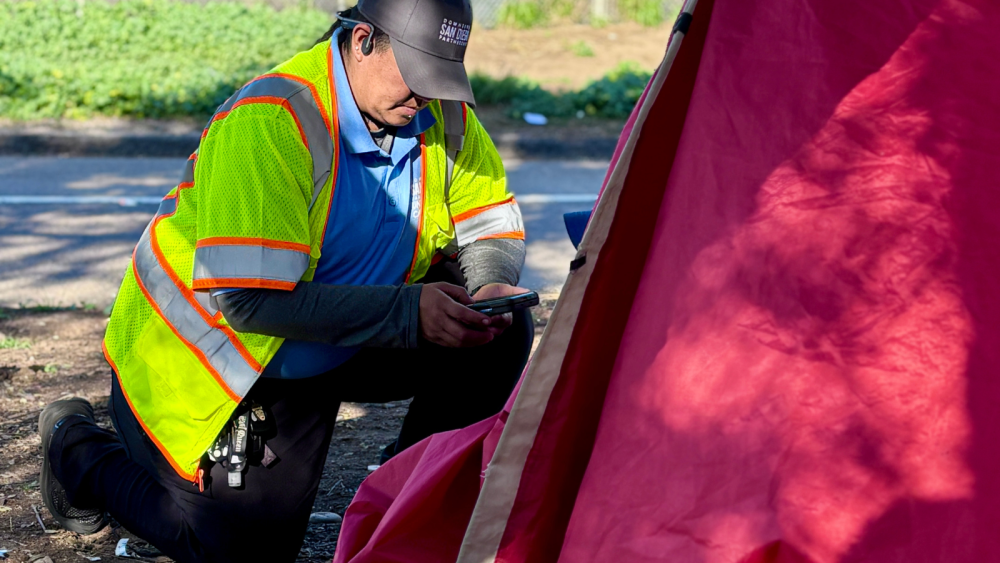
The Unsafe Camping Ordinance has significantly reduced the presence of unsafe encampments across the city by connecting more unhoused residents with shelter and services. Additionally, under a new Delegated Maintenance Agreement with Caltrans, City outreach workers can now perform outreach people experiencing homelessness on Caltrans property along five miles surrounding Downtown. Between July 2025 and March 2026, 117 people have been assisted through this outreach, including 14 who have secured housing.
The City’s Coordinated Outreach Program now deploys over 40 outreach workers citywide.
Addressing homelessness was one of the priorities identified by San Diego residents in the City’s Fiscal Year 2027 Budget Survey. More than 12,000 residents have taken the survey so far.