
Road Repair Projects Continue in Pacific Beach, La Jolla, Carmel Valley, Pacific Highlands Ranch and Torrey Pines
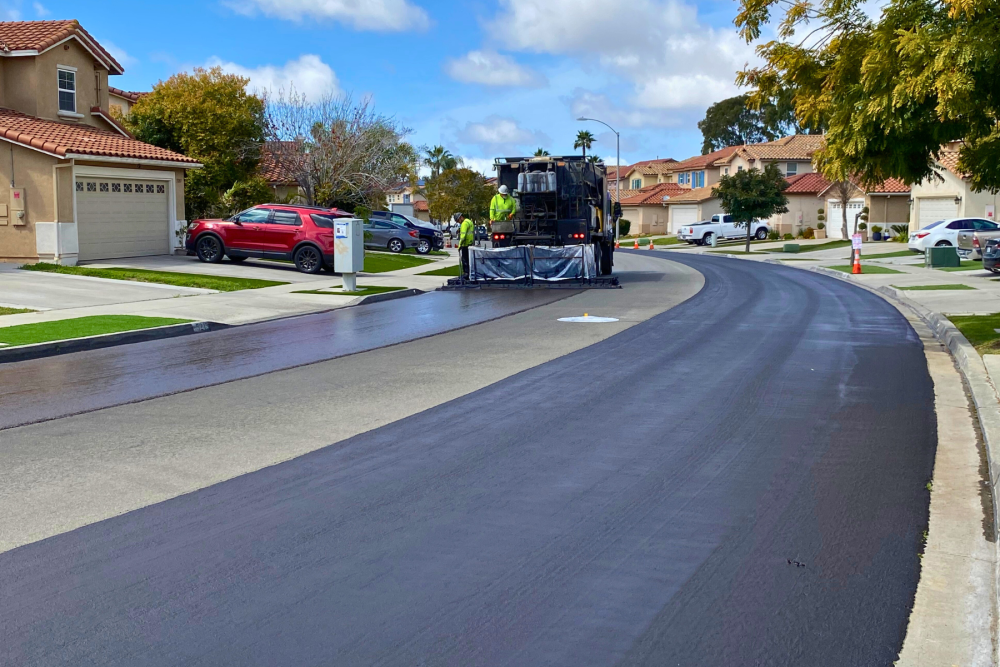
Several more communities in the City of San Diego will soon have improved street conditions thanks to the continued efforts of the Transportation Department’s slurry seal program, part of an overall effort to repair and resurface roads citywide.
Slurry seal is used to slow street deterioration, which is vital to improving the overall condition of San Diego’s network of roads. By maintaining streets earlier in their lifecycle, slurry seal helps reduce the need for a more costly asphalt overlay and reconstruction in the future.
Last fiscal year, the City applied slurry seal to more than 380 lane miles of roadway, or approximately 6% of San Diego’s road network.
Seven slurry seal projects are scheduled to be completed within this current fiscal year, which ends June 30, 2026. Slurry seal is often completed in phases over several days or weeks. Multiple projects are happening across the City simultaneously and are often coupled with other upgrades to increase safety and mobility for all modes of transportation.
Construction on the latest project, Slurry Seal Project 2622, starts Wednesday, Jan. 14, weather permitting, and will continue through the month of January in the communities of La Jolla, Pacific Beach, Carmel Valley, Pacific Highlands Ranch and Torrey Pines.
Through the first three weeks of the project, the following roads will be resurfaced:
John Jay Hopkins Drive • Fay Avenue • La Jolla Boulevard • Balboa Avenue • Garnet Avenue • Prospect Place • Exchange Place • Olivet Street • Paseo Dorado • High Avenue • Everts Street • Pacific Beach Drive • Thomas Avenue • Rutgers Road • Candlelight Drive • Germaine Lane • Hidden Valley Road • La Jolla Rancho Road • Corral Way • Van Nuys Street • Vickie Drive • Diamond Street • Cottontail Lane • Oliver Avenue • Felspar Street • Via Siena • Via Viesta • Via Maria • Winamar Avenue • Emerald Street • Missouri Street • Fay Avenue • High Avenue • Ladybird Lane
Slurry seal is a cost-effective pavement preservation method consisting of asphalt emulsion, sand and rock. This mixture is applied to the street surface at an average thickness of a quarter inch and extends the life of streets that are already in good condition. Information about different types of street repair can be found on the City’s Transportation webpage.
Streets are selected for resurfacing through a pavement management system that helps determine when to schedule streets for repair. Each street segment is assigned a Pavement Condition Index (PCI) score based on the pavement’s roughness and cracks.
The PCI score is one of many factors the City uses to schedule road repair. Other factors include traffic volume, mobility and transit connections, maintenance history, other construction projects and available funding. Residents can view the PCI scores for their neighborhood streets and maps of planned street repair by visiting StreetsSD.
The City’s Pavement Management Plan relies on the 2023 Pavement Condition Assessment and summarizes current street conditions in San Diego, while also identifying the funding needs to improve the overall street network.