
Regional Partnerships Strengthen San Diego’s Emergency Preparedness
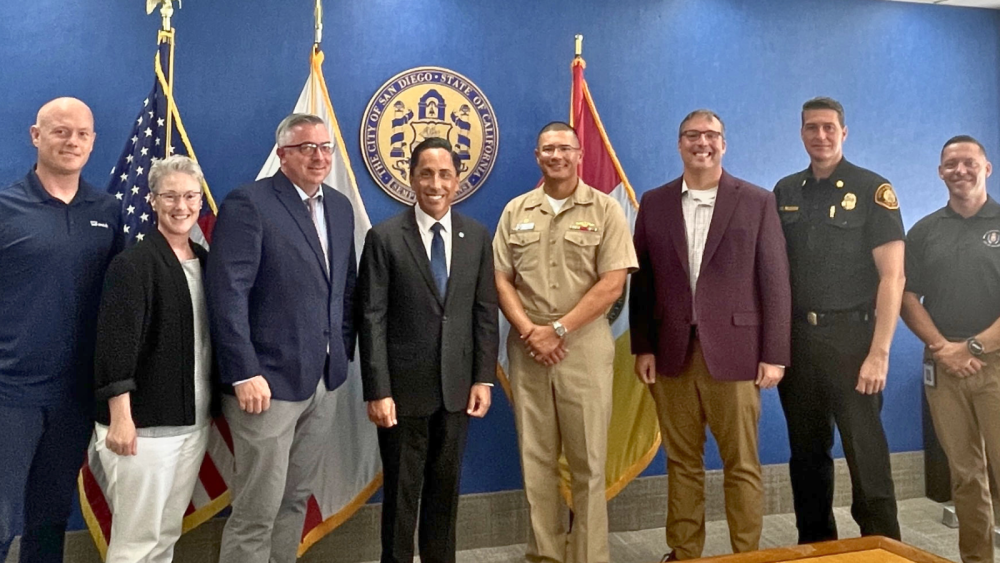
When an emergency affects San Diego, no single agency responds alone. City, County, State, federal and military partners regularly train together so they can quickly share information, coordinate resources and protect the public when a crisis occurs.
One way those partnerships are strengthened is through the U.S. Navy’s annual Emergency Control Center Orientation at Naval Base Point Loma, which brings emergency managers, public health officials, first responders and Navy leadership together before an emergency happens.
Hosted by Commander, Submarine Squadron 11, the orientation gives participating agencies an opportunity to better understand how they would work together during a regional emergency. According to Submarine Squadron 11 leadership, effective crisis response depends on strong relationships and clear communication long before an incident occurs.
“San Diego is our community,” said Navy Capt. Phil Sylvia. “We are neighbors. These relationships are so important, and Orientation Day gives us time to get to know each other so we’re not meeting for the first time in a crisis.”
The Emergency Control Center at Naval Base Point Loma serves as a centralized command post where Navy leaders and regional partners can coordinate information, resources and response efforts during an emergency.
Participants included emergency management, public health, fire, hazardous materials, utility and military representatives from agencies across the San Diego region, along with State and federal partners.
During the orientation, participants toured the Emergency Control Center and learned how its command, control and communications systems would be used during a regional emergency. The orientation also gave partner agencies an opportunity to better understand one another’s capabilities and how they would coordinate during a real-world response.
Participants also received information about the Navy’s nuclear propulsion training and safety programs and saw emergency response resources used by Navy, fire and hazardous materials teams.
These partnerships help ensure agencies that may use different systems, terminology and response structures already know how to work together before a crisis occurs. Building those relationships in advance can improve communication, coordination and decision-making when time matters most.
That coordination will continue to be tested through regional exercises, including Resilient Sentinel II, a full-scale joint emergency exercise planned for 2027. The exercise will bring emergency services, public health, environmental agencies, local and state government, and the Navy together to practice and improve the communication and response procedures that would be used during an actual emergency.