
New Report Shows More Than 60,000 San Diegans Helped by Federal Funding in Past Year
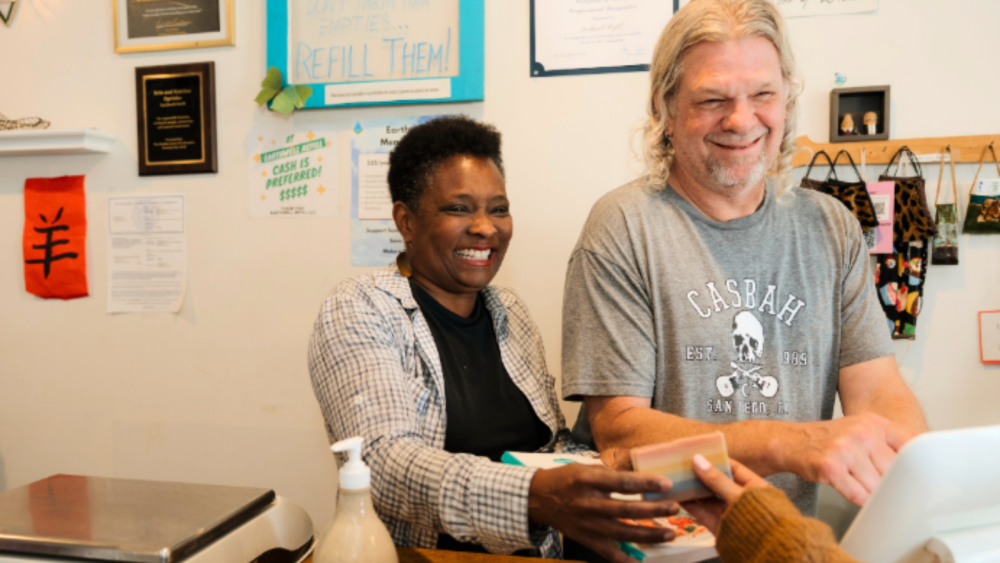
Tens of thousands of San Diegans, including seniors, families, veterans, youth and other vulnerable residents, found crucial support through federal programs made available through the City of San Diego this past fiscal year, which ended June 30. These resources provided housing opportunities, shelter, business loans and training, as well as essential services like meals and academic support.
The City of San Diego’s newly released draft Fiscal Year 2026 Consolidated Annual Performance and Evaluation Report (CAPER) outlines specifically how more than $48.8 million in U.S. Department of Housing and Urban Development (HUD) funds were used to make a positive local impact. The funding, designated to the City and administered by the City and the San Diego Housing Commission, came from three major programs: the Community Development Block Grant (CDBG), the HOME Investment Partnerships Program and Emergency Solutions Grants (ESG).
CDBG funding supports a variety of housing, community and economic development projects that benefit low- to moderate-income residents. The HOME Investment Partnership Program is designed exclusively to create affordable housing for low-income households, and the ESG program supports emergency shelter operations, provides essential services to people experiencing homelessness and moves people into permanent housing.
The CAPER is an annual report that shows the City’s progress in achieving the visions and goals in the Fiscal Year 2025-2029 Consolidated Plan. This plan is put together using public input. Organizations are selected each fiscal year through a competitive process and presented in an annual action plan, which the City Council must approve and is later submitted to HUD.
Examples of funded organizations with completed projects in fiscal year 2026 include UrbanLife Ministries, Home Start, Inc., International Rescue Committee, Mama’s Kitchen and Voices for Children. These organizations provided services like job-readiness opportunities, academic enrichment, health programs, meals and support for foster children.
Among several infrastructure projects that were completed, the Clay Avenue, Island Avenue, Gamma Street and J Street mini parks in southeast San Diego received funding, as well as the Martin Luther King Jr. Recreation Center to repair and rehabilitate its building. Federal funding also brought health and safety improvements to Civic Center Plaza in Downtown; helped affordable housing development Serenade on 43rd in City Heights move forward financially through the City’s Bridge to Home program; helped construct and rehabilitate a number of affordable housing developments for those at risk or experiencing homelessness, including Presidio Palms in Mission Valley and Pacific Village in the Midway District; helped fund homeless shelters and services for individuals and families; and provided homeowners with financial assistance.
Overall, highlights include:
- 63,867 individuals received essential services.
- 386 households received housing support, including rapid rehousing and new or rehabilitated rental units.
- 27 homeowners received financial assistance.
- 453 people assisted with overnight shelter, and 84 people experiencing or at risk of homelessness assisted with supportive services.
- 225 Fair Housing investigations were conducted, and 26 Fair Housing workshops and training sessions were held.
- 363 businesses received loans, training and technical help.
- One community facility project was completed, and seven City infrastructure projects were completed.
“Federal funding is a vital driver of community progress in San Diego,” said Economic Development Director Christina Bibler. “This past fiscal year, these resources empowered us to support local businesses, expand affordable housing and strengthen the essential services residents rely on every day. These investments continue to make a meaningful difference for our communities.”
In addition to tracking the outcomes and impact to communities, the report also highlights how the City monitors and tracks the use of these federal funds. The draft Fiscal Year 2026 CAPER is available for public comment until Sept. 15, 2026. Residents can view the report online or at several libraries, including Central, Valencia Park/Malcolm X, Otay Mesa-Nestor, Linda Vista and City Heights/Weingart. A public meeting will be held on Sept. 9, 2026, where the Consolidated Plan Advisory Board will hear community input. The report was presented at the Economic Development and Intergovernmental Relations Committee on Sept. 2, 2026, and will be heard at City Council on Sept. 22, 2026.
All comments will be reviewed and included in the final report, which must be submitted to HUD by Sept. 28, 2026.
The City encourages residents to review the draft Fiscal Year 2026 CAPER and share feedback to help shape how federal resources continue to serve San Diego communities. Residents can email their comments to cdbg@sandiego.gov or mail them to City of San Diego, Economic Development Department, Attention: Draft FY2026 CAPER, 1200 Third Ave., Suite 1400, San Diego, CA 92101. For more information, visit the Community Development Block Grant Program Plans and Reports webpage.