
Comprehensive Speed Management Plan Released
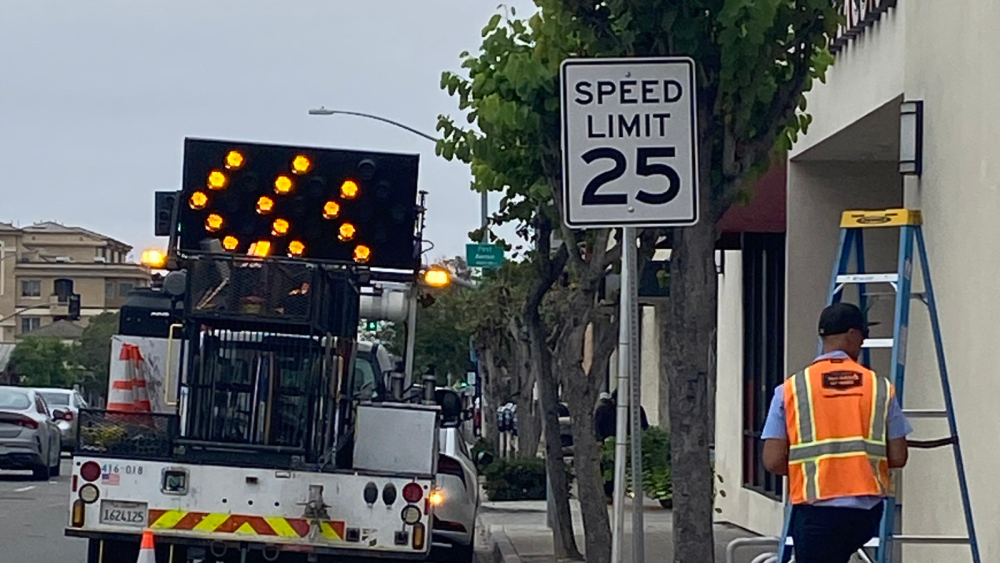
This week, the City of San Diego announced the release of its Comprehensive Speed Management Plan, a citywide, data-informed strategy to reduce vehicle speeds in areas allowed under state law and advance the City’s Vision Zero commitment to eliminate traffic fatalities and serious injuries.
Speeding remains one of the leading factors in severe and fatal traffic collisions. The Comprehensive Speed Management Plan used a data-driven, city-wide approach to lower speed limits across San Diego’s neighborhoods, commercial corridors, and school zones.
“Every San Diegan deserves to feel safe walking, biking or driving in their community,” said Councilmember and Committee Chair Stephen Whitburn, “This plan provides a clear roadmap to reduce dangerous speeds, protect lives, and build streets that work for everyone.”
In 2022, the U.S. Department of Transportation awarded the City of San Diego $680,000 through the Safe Streets and Roads for All (SS4A) grant program, funded through the Bipartisan Infrastructure Law. The funding supports Vision Zero initiatives aimed at reducing fatal and serious injury crashes through safer street design, safer speeds, equitable access improvements, and community engagement. The SS4A grant, which was supported by San Diego’s congressional delegation, funded several supplemental planning efforts, including the development of this Comprehensive Speed Management Plan.
San Diego maintains approximately 3,185 centerline miles of public streets, with about 842 miles included in the City’s Engineering & Traffic Survey (E&TS) network. Under California law, speed limits posted above 25 mph generally require an E&TS, which requires measurement of the 85th percentile speed, generally reflecting how fast most drivers are already traveling. While required by law, this method has limited local flexibility to proactively lower speed limits on streets with higher safety risks, particularly in areas with significant pedestrian, bicycle, school, or commercial activity. Many residential streets outside the E&TS network default to a 25mph speed limit under state law.
Recent changes in California law including Assembly Bills 43, 1938, and 382 now provide cities greater flexibility to reduce speed limits based on safety and street context. These laws allow targeted speed reductions in specific situations:
- Safety Corridors: Up to 5 mph reductions on corridors with higher concentrations of fatal or serious injury crashes.
- High Pedestrian & Bicyclist Activity Corridors: Up to 5 mph reductions on streets near sidewalks, bikeways, transit, and activity centers.
- Business Activity Districts: Reduced speeds to 25 mph or 20 mph on commercial streets with frequent crossings and parking activity.
- School Zones: Reduced speeds to 15 mph or 20 mph within 500 feet of schools, and 25 mph between 501 and 1,000 feet on qualifying nearby approach streets.
These provisions allow speed limits to better reflect how streets are used and who is present, particularly in areas where slower speeds are essential for safety. Using the new state authorities, the City conducted a citywide, data-informed assessment to identify streets eligible for potential speed limit reductions.
The analysis found that over 20 percent of San Diego’s roadway network, 679.1 centerline miles, is eligible for potential speed limit reductions, including:
- 189.6 centerline miles eligible as Safety Corridors
- 32.6 centerline miles eligible as High Pedestrian & Bicyclist Activity Corridors (All 189.6 miles of Safety Corridors also qualify under this category)
- 58.7 centerline miles eligible as Business Activity Districts
- 371.1 centerline miles eligible for School Zone speeds (15 or 20 mph)
- 27.1 centerline miles eligible for School Approach speeds (25 mph)
“The Comprehensive Speed Management Plan represents a significant step in aligning San Diego’s speed limits with Vision Zero safety priorities,” said Transportation Department Interim Assistant Director Margaret McCormick, “The City has a clear and consistent framework to reduce speeds where they will make the most safety impact for all road users.”
However, lowering posted speed limits alone will not achieve San Diego’s Vision Zero goals. Speed management must be paired with continued traffic calming improvements, intersection safety enhancements, street design changes, education and public outreach, and traffic enforcement.
Implementation of the plan is estimated to begin in Fiscal Year 2027, subject to available funding and approval through the City’s annual budget process. As changes are made, the City will monitor outcomes and continue engaging the public to ensure speed reductions translate into measurable safety improvements.
The City of San Diego’s Comprehensive Speed Management Plan can be found at https://www.sandiego.gov/vision-zero/safety-initiatives