
City Recommends ‘Bridge to Home’ Funds for 430 Affordable Homes
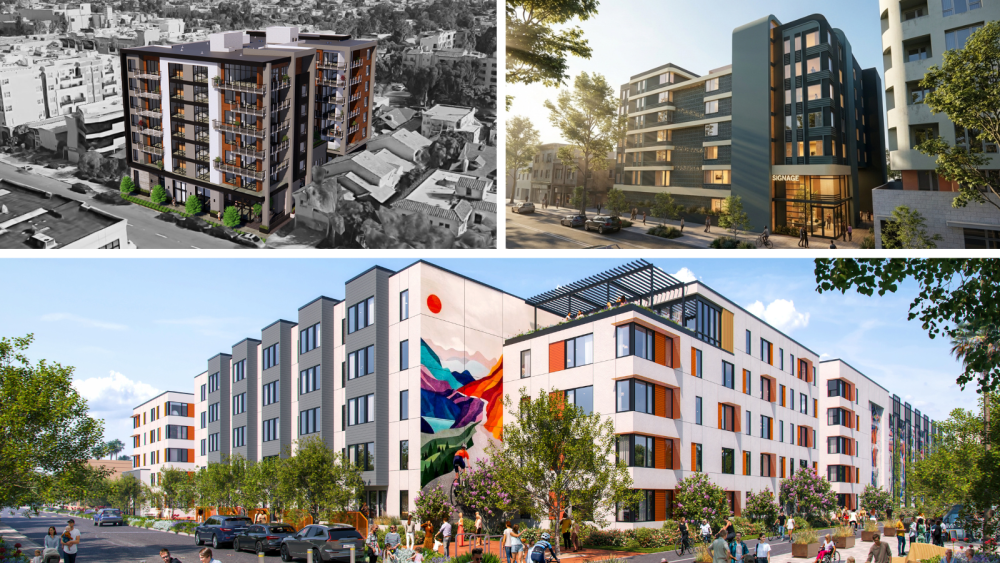
As part of its continued efforts to expand housing options for low-income individuals and families, the City of San Diego is recommending its next round of Bridge to Home funds support the creation of 430 new affordable homes. This funding is part of Round Seven of the gap-financing program, which has already helped expedite the construction of 2,539 affordable homes across 27 projects.
“The cost of housing continues to put pressure on San Diegans, which is why we are moving aggressively to accelerate affordable housing production across our city,” said Mayor Todd Gloria. “Bridge to Home is one of the tools helping us get more projects built faster. These recommendations will create more affordable homes for seniors in Hillcrest, working families in City Heights, and San Diegans at risk of homelessness.”
In February, the City issued a notice of funding availability (NOFA), which allows qualified developers to submit proposals for how they would use the funding to create low- to moderate-income units. Because affordable housing projects often rely on a mix of local, state and federal funding, Bridge to Home helps fill the remaining financial gap needed to move these developments forward.
The City received 10 responses, totaling $55 million in requested funding. Of those, the City recommends three developments that would create a combined 430 affordable homes:
4th & Brookes Senior Apartments in Hillcrest – 98 studio, one- and two-bedroom affordable homes for senior citizens who make 30% to 60% of the area median income (AMI). Thirty of the apartments will be reserved for those earning 40% of the AMI or less, which means they are at risk of homelessness. Half of the apartments will be designed to be accessible for those with disabilities. The building will also include ground-floor retail space. This development is in a State-designated High Resource Area. These areas have historically lacked sufficient affordable housing but provide strong access to jobs, education, transit and other essential community resources.
Polk Avenue Housing in City Heights – 267 one-, two-, three- and four-bedroom affordable homes for those making 30% to 100% of the AMI. One-hundred ninety-two of the homes will be for households earning 30% to 60% of the AMI. The development will also include 75 “missing middle” workforce apartments available to San Diego Unified School District teachers and staff, making 80% to 100% of the AMI. As part of this development, a portion of the existing former Central Elementary school buildings will be rehabilitated for new administrative offices and classrooms for the District’s TRACE school for adults with disabilities. Polk Avenue Housing will include a pedestrian and bicycle promenade, nonprofit spaces, event space, a commercial shared kitchen, a permanent rehearsal and performance space for Fern Street Circus, and a separate five-story parking structure.
Teralta South in City Heights – 65 studio, one-, two- and three-bedroom affordable homes for households earning 30% to 60% of the AMI. It will include a community room, a computer lab, two podium-level courtyards, a play area, bike storage and parking. Nearby amenities include the Copley-Price Family YMCA, Teralta Park, City Heights Park, schools, a grocery store, clinic, pharmacy, library and bus stops for three transit routes.
“These recommended projects reflect our commitment to strengthen neighborhoods and expand opportunity for all San Diegans,” said Economic Development Director Christina Bibler. “By directing Bridge to Home funds where they can have the greatest impact, we’re helping create high-quality, affordable homes in communities with direct access to jobs, transit and essential resources. This investment not only supports San Diegans who need it most, but it also advances long-term economic vitality across the city.”
The City evaluated development submittals based on feasibility, project approach and concept, including alignment with the community plan, and community support and benefits. Projects also received bonus points if they were located in moderate, high and highest resource areas. Developers must have also been a part of the City’s pre-qualified developers list, which helps the City attract and select qualified development teams promptly.
Of the $16.5 million in this round of Bridge to Home funding, $12 million is derived from former redevelopment funds, which are restricted to creating new housing, including site improvements and construction. The remaining $4.5 million comes from State Permanent Local Housing Allocation funds, which support the new construction or acquisition and rehabilitation of homes for persons experiencing, or at risk of, homelessness and those with household incomes at or below 30% of the AMI.
City staff presented its recommendations in an informational update to the Economic Development and Intergovernmental Relations Committee on Wednesday, June 10. Each of the project’s loan agreements will need to be approved by City Council.
Since Mayor Gloria launched the Bridge to Home program in 2021, City Council has approved 25 project loan agreements, with now five project loan agreements awaiting approval, including these three new developments, totaling 2,969 affordable homes. This includes 473 units with proposed supportive services for people who are experiencing or at risk of homelessness.
To date, 561 affordable homes have been built, and an additional 324 homes are currently under construction.