
City Attorney's Office Partners with U.S. Attorney's Office, SDSU Football and Aztec Link on Fentanyl Awareness Campaign
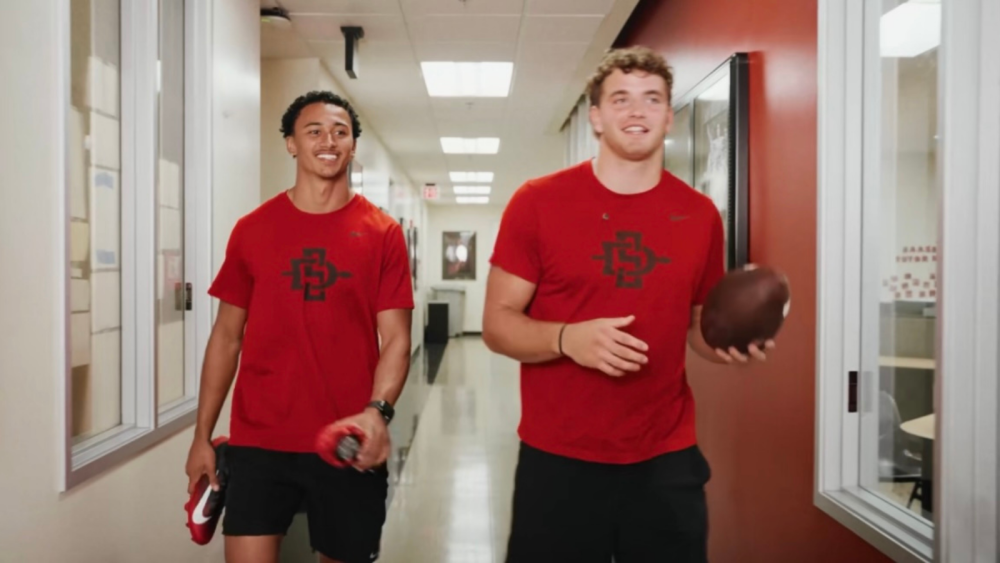
The City Attorney's Office today launched a social media campaign, #BEONTHESAFESIDE, featuring San Diego State University (SDSU) student-athletes and students to promote fentanyl awareness and overdose prevention, in partnership with Aztec Link and the U.S. Attorney's Office for the Southern District of California. The campaign was developed by the City Attorney's newly launched Fentanyl and Opioid Community Understanding and Safety Program (FOCUS).
International Overdose Awareness Day, observed every Aug. 31, is the world's largest annual campaign to end overdose and remember those we’ve lost.
The public service announcement, "Be on the Safe Side," was filmed at the Fowler Athletics Center on the SDSU campus. The student-athletes are shown looking out for their classmates in small, everyday ways before getting to the real point: fentanyl. They walk through how it hides in counterfeit pills, the signs of an overdose, including shortness of breath, skin turning purple, and being cold to the touch, and how Narcan works. The video ends with the players stating: "Be on the safe side. Know the risks. Use Narcan. Call for help. Aztecs protect Aztecs."
Counterfeit pills sold as Adderall, Xanax, Percocet, or oxycodone are frequently pressed with fentanyl. A lethal dose can be as small as two milligrams. Most are bought through social media apps and pressed to look pharmaceutical.
"One pill can end a life, and the person taking it usually has no idea what is in it," said City Attorney Heather Ferbert. "That is what makes awareness so powerful. When Aztec football players speak, young people in San Diego listen. I’m grateful to these student athletes for using their platform this way, and to Aztec Link, Aztecs Going Pro and the U.S. Attorney's Office for partnering with us again. Prevention only works when a whole community carries the message. On International Overdose Awareness Day, we honor the families who have lost someone and recommit to making sure fewer families join them."
“We don’t want students scared. We want them empowered. That means learning about the risks of fentanyl, recognizing the signs of an overdose, and teaching them how to respond to help someone in need,” said U.S. Attorney Adam Gordon.
The City Attorney's Office's FOCUS program pairs prosecution with prevention. It vertically prosecutes opioid-related cases. Its education arm, the Fentanyl Education and Awareness Campaigns, combines education, athletics, and peer leadership to reach thousands of college students across San Diego, engaging higher-risk groups such as Greek life and student-athletes while providing Narcan access and overdose training.
Aztecs Going Pro, is San Diego State athletics four-year student-athlete development program focused on life skills education. The program is centered on three pillars: personal growth, career development and civic engagement.
Aztec Link, SDSU's name, image, and likeness collective, connects student-athletes with opportunities to build their personal brands and lend their platforms to causes in the community. That reach is the point: the players' accounts carry the message into high schools, youth leagues, and neighborhoods that public health campaigns rarely touch.
The City Attorney's Office and the U.S. Attorney's Office have built these campaigns around student-athletes since 2023, working previously with SDSU women's soccer, SDSU men's basketball and the MESA Foundation, and the University of San Diego women's volleyball team and the Olé Foundation.
The public service announcement can be viewed on Instagram at @heatherferbert.ca, @usao_sdca, @aztecfootball, @azteclink_nil, and @aztecsgoingpro. The campaign uses the hashtags #SafeSide and #BeOnTheSafeSide.
Naloxone is an opioid overdose reversal medication, available either as a nasal spray or an injector. Many pharmacies carry naloxone. In California, you can get naloxone from a pharmacist without a prescription. It is also possible to get naloxone from community-based distribution programs, local public health groups, or local health departments, free of charge. A searchable map of free naloxone pickup locations across San Diego County is available at sandiegoopioidproject.com/naloxone.
Free prevention resources are available at www.suopt.org, including toolkits on fentanyl, naloxone, and social media risks, fentanyl fact sheets tailored to schools, families, and young adults, counterfeit pill identification guides, information on California's Good Samaritan Law, support for families who have lost someone, and a treatment locator map. All materials are offered in English and Spanish.
If you believe someone is overdosing, call 911 immediately and administer naloxone if it is available.