
Public Safety | Streets and Sidewalks
City Advances Safety Improvements for High Crash Locations
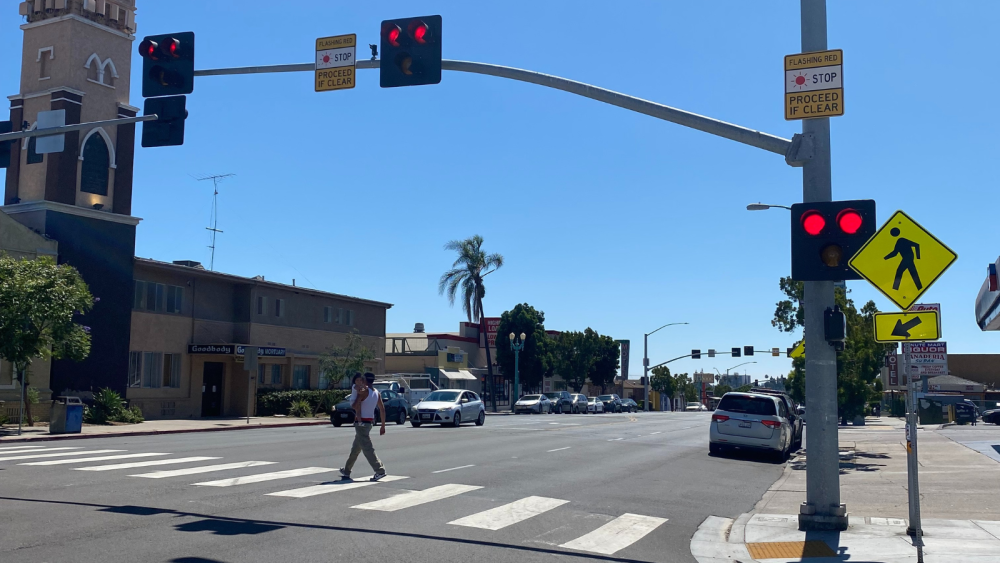
As part of its ongoing efforts to improve traffic safety conditions for all road users and help protect pedestrians, the City of San Diego’s Traffic Engineering team conducts an annual data-driven review to help prioritize locations for safety improvements. In the most recent evaluation, 14 locations were identified, and work is already underway at several of these intersections.
In analyzing these locations, City staff reviewed collision data from calendar year 2024 and evaluated intersections where five or more injury or fatal crashes had occurred. This screening process helps inform where traffic engineering resources may be most effectively focused, as part of the City’s proactive traffic safety program. The analysis also looked at patterns, street segments with the most injury crashes, and intersections with the most crashes involving pedestrians.
The following locations have been prioritized for further traffic engineering evaluation and potential safety enhancements:
- 15th Street at F Street
- 8th Avenue at Broadway
- Bayard Street at Grand Avenue
- 8th Avenue at University
- Kettner Boulevard at Sassafras Street
- 10th Avenue at A Street
- Otay Center Drive at Siempre Viva Road
- Kettner Boulevard at Sassafras Street
- Garnet Avenue at Mission Bay Drive
- Fairmount Avenue between Montezuma Road and Talmadge Canyon Row
- Imperial Avenue between 53rd Street and Jacinto Drive
- Main Street between the I-5 off ramp and Woden Street
- Midway Drive between Kemper Street and Duke Street
- Mission Gorge Road between Twain Avenue and Mission Gorge Place
Traffic engineering teams continue to design and schedule construction for these safety improvement projects. Transportation crews have completed, or are in the process of completing, the recommended safety improvements at several locations including the segments of Fairmount Ave., Main St. Mission Gorge Rd. and Imperial Ave. but some must be completed through the City’s Capital Improvement Program and will require additional funding to implement.
“Our engineers and field operations teams are working hand in hand to ensure these safety upgrades are implemented to maximize safety for all road users,” said Transportation Department Interim Assistant Director Margaret McCormick. “Being able to carry out these projects with our in-house teams is important so the work can be completed as quickly and efficiently as possible.”
Among the safety recommendations for these 14 locations are additional signs, flashing beacons and crosswalks that aim to improve visibility for drivers to see pedestrians entering the intersections. The recommendations also call for upgrading traffic signal lights, replacing or adding speed limit signs, and installing pedestrian countdown timers. Where applicable, intersections may receive additional red curbs to be consistent with the new Assembly Bill 413 “Daylighting Law” which prohibits vehicles from parking within 20 feet of a marked or unmarked crosswalk.
Traffic engineering recommendations vary for each location and, in some cases, require coordination with other agencies, including the Metropolitan Transit System.
Each year, the City’s Transportation Department conducts a citywide high crash analysis as one of several tools used to guide planning, policy decisions, and future safety investments. The results are made available on the City’s Vision Zero website. As part of the City’s commitment to safety, the High Crash Location analysis is one of many studies the City completes to help improve safety within the right of way. The department also performs assessments of all fatal crashes and prepares recommendations for improvements at these locations.
In addition, the City completed a Systemic Safety Analysis that examines common roadway and traffic characteristics across intersections where fatal crashes have occurred to support data-informed planning and prioritization.
To learn more about the City’s efforts to create safer roads and improve mobility options, visit sandiego.gov/VisionZero.